
Breastfeeding: Celebrating the Benefits While Honouring Every Parent's Journey
Published in recognition of World Breastfeeding Week — 1st to 7th August
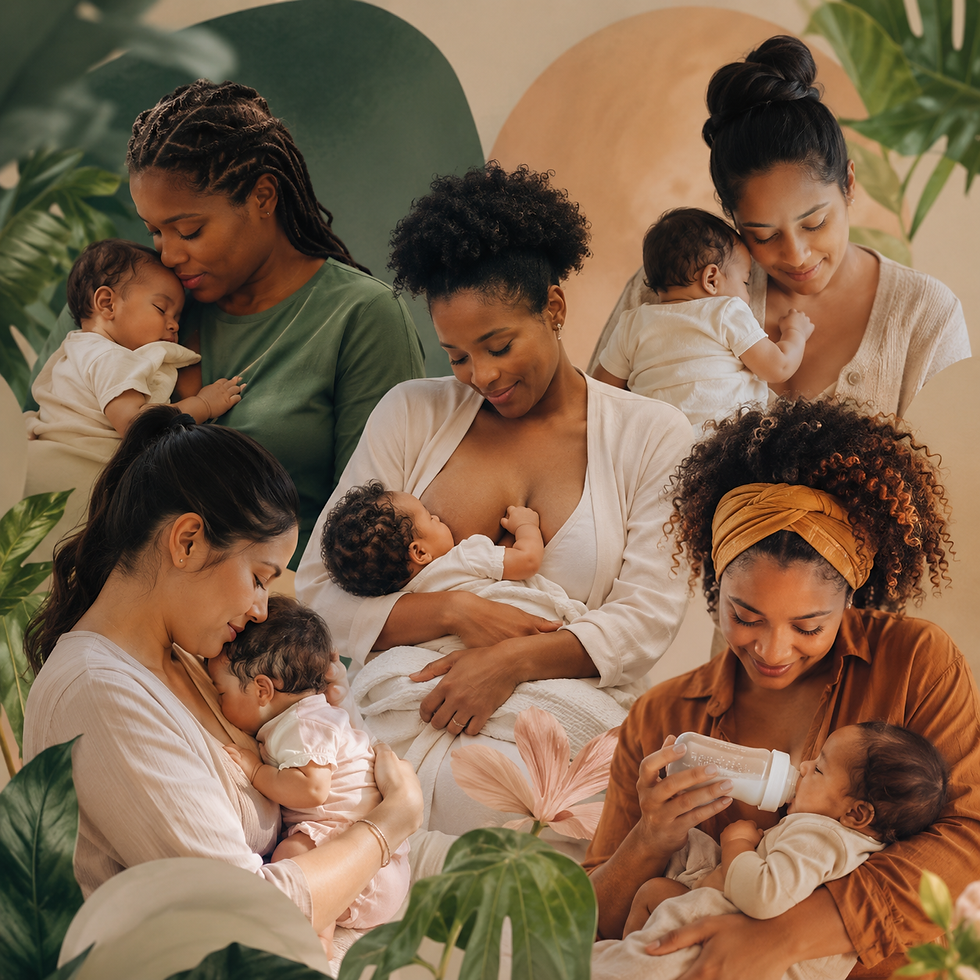
Each year, World Breastfeeding Week shines a light on one of the most natural and remarkable ways a parent can nourish their baby. For many families, breastfeeding is a deeply meaningful experience that provides nutrition, comfort and connection from the very beginning of life.
Yet, for all the conversations about breastfeeding, there is often another conversation happening quietly in the background.
The mother who desperately wanted to breastfeed but struggled with low milk supply. The parent whose baby couldn't latch. The woman recovering from a difficult birth while trying to navigate sleepless nights, sore nipples and well-meaning advice from everyone around her. The parent who returned to work sooner than expected. The family who chose formula because it was the healthiest option for them.
These stories matter too. There is room in this conversation for both celebration and compassion.
Breastfeeding has many well-established health benefits and deserves to be celebrated. But celebrating breastfeeding should never come at the cost of shaming those whose journeys look different.
The World Health Organization recommends exclusive breastfeeding for the first six months of life, followed by continued breastfeeding alongside appropriate complementary foods for up to two years and beyond.
Let's explore both the benefits and the challenges, because informed, compassionate conversations serve families far better than guilt ever will.
The Health Benefits for Babies
Breast milk is often described as nature's first food, and for good reason. It contains a unique combination of nutrients, antibodies and living components that support a baby's growth and development — and its composition actually changes over time to meet a growing baby's changing needs.
Breastfeeding has been associated with a lower risk of ear infections, respiratory infections, gastrointestinal illnesses and diarrhoeal disease during infancy. Research also suggests possible long-term benefits including a reduced risk of childhood obesity, Type 2 diabetes and Sudden Infant Death Syndrome, though scientists continue to study these relationships and recognise that many factors influence a child's long-term health.
Beyond nutrition, breastfeeding is also one of the earliest ways babies communicate their needs and build trust with their caregivers. The close physical contact, skin-to-skin touch and responsive interaction help babies feel safe, comforted and emotionally regulated — teaching them, from their very first days, that their needs will be met with love.
The Health Benefits for Mothers
Breastfeeding stimulates the release of oxytocin, which helps the uterus contract after birth, reducing postpartum bleeding and supporting recovery. Research has also shown that longer periods of breastfeeding are associated with a reduced risk of breast cancer, ovarian cancer and possibly Type 2 diabetes and cardiovascular disease.
Many mothers describe breastfeeding as a deeply bonding experience — the quiet moments spent feeding can strengthen attachment and encourage closeness between parent and baby. That said, every experience is different. Not every parent feels an immediate bond through breastfeeding, and that does not mean they love their child any less.
Practically speaking, breast milk is always available, always the right temperature, sterile and environmentally friendly. For many families, it is also significantly less expensive than formula — a practical reality that matters enormously, especially in Caribbean households where cost of living continues to rise.
The Challenges We Don't Talk About Enough
Although breastfeeding is natural, it isn't always easy. Many parents are surprised to discover that it often requires learning, patience and support. Difficulty with latching, cracked or sore nipples, engorgement, blocked milk ducts, mastitis, concerns about milk supply, cluster feeding and sheer sleep deprivation can make breastfeeding one of the hardest parts of early parenthood.
This doesn't mean they're failing. It means they're human.
If breastfeeding is painful, stressful or simply isn't working the way you expected, you don't have to struggle alone. Lactation consultants, midwives, healthcare professionals and breastfeeding support groups can often help solve challenges that feel overwhelming in those early weeks. Asking for help isn't failure. It's often the first step toward finding what actually works for you and your baby.
Mental Health Matters Too
Breastfeeding conversations often focus so heavily on the baby that we forget to ask how the mother is coping.
Some women experience overwhelming anxiety about milk supply. Others feel crushing guilt if breastfeeding doesn't go according to plan. Some experience pain every single time they feed. Others live with postpartum depression, anxiety or a condition called Dysphoric Milk Ejection Reflex — D-MER — where milk let-down triggers sudden, unexplained feelings of sadness, dread or irritability that disappear shortly after the feed ends.
These experiences are real. They deserve compassion, not judgment. Protecting a parent's mental health is also protecting the baby's wellbeing. The two are not separate conversations.
The Weight of Expectations
Alongside the physical challenges, many parents carry an enormous emotional burden.
They may feel guilty if breastfeeding doesn't go according to plan, ashamed if they supplement with formula or worried that they've somehow failed their baby. Social media, well-meaning family members and even healthcare messaging can unintentionally reinforce the idea that there is only one "right" way to feed a child.
But parenting has never been about perfection. It has always been about responding to the needs of both the baby and the parent with love, wisdom and compassion.
Breastfeeding Is a Family Journey
Although only one person breastfeeds, breastfeeding is rarely a journey travelled alone. Behind every feeding is a family, or at least, it should be.
Partners, grandparents, siblings, relatives and close friends all have the opportunity to shape a mother's experience, either by adding to her stress or by helping to lighten her load.
For fathers and partners especially, it can sometimes feel like there isn't much they can do. After all, they can't breastfeed. But support is about far more than feeding. It looks like bringing a glass of water while she nurses. Preparing a meal when she's too exhausted to cook. Changing nappies after feeds. Helping with burping. Holding the baby so she can shower or get an extra hour of sleep. Encouraging her when she's questioning herself. Standing beside her if someone criticises her for breastfeeding in public. Protecting her peace when everyone suddenly has an opinion about how the baby should be fed.
Sometimes the greatest gift a partner can offer isn't advice. It's saying:
"You're doing an incredible job."
Fathers and partners can also build powerful bonds through skin-to-skin contact, cuddling, talking, bathing and responding consistently to their baby's needs. Feeding may be one part of attachment, but it is never the whole story.
Research consistently shows that mothers who feel supported by their partners are more likely to achieve their breastfeeding goals, whatever those goals may be.
Breastfeeding may happen between one parent and one baby. But supporting breastfeeding is something the whole family can do.
In Caribbean families, where grandparents, aunties, uncles and neighbours often become part of raising a child, support can come from many places. A meal dropped off, an hour of babysitting so mum can rest, or simply choosing encouragement over criticism can make an enormous difference.
Returning to Work
Many parents stop breastfeeding earlier than they had hoped, not because they wanted to, but because life required it.
Some workplaces offer little privacy or flexibility for expressing milk. Others lack clean, comfortable spaces to pump or adequate refrigeration. Long commutes, inflexible schedules and demanding workloads can make maintaining a breastfeeding routine feel almost impossible. And beyond the practical challenges, there is the emotional one — the feeling of being torn between two responsibilities, followed by grief or guilt when circumstances force an earlier stop than planned.
These emotions are real and they are rarely acknowledged.
Supporting breastfeeding means creating environments where families can succeed if they choose to. Employers have an important role to play — providing reasonable breaks, private spaces for expressing milk and workplace policies that recognise the realities of parenting. A breastfeeding-friendly workplace isn't simply a benefit for parents. It's an investment in healthier families and a culture that recognises caregiving as part of life, not an inconvenience.
Breastfeeding in Public: Why Are We Still Uncomfortable?
For something as natural as feeding a baby, breastfeeding in public continues to generate an astonishing amount of discomfort.
Many mothers have experienced the disapproving stare, the unsolicited comment or the suggestion that they should go somewhere private. Yet babies don't only become hungry in the privacy of their own homes. They become hungry while shopping, waiting at clinics, travelling or sitting at a family gathering. Feeding them isn't an act of exhibitionism. It's an act of care.
The sexualisation of women's bodies has led some people to view breastfeeding through an inappropriate lens — forgetting that breasts have a biological purpose long before they became objects of sexual attraction. For some mothers, the fear of judgment becomes so overwhelming that they begin avoiding outings, delaying feeds or stopping breastfeeding earlier than planned. No parent should have to choose between nourishing their child and avoiding public criticism.
A society that says "breast is best" cannot, in the same breath, shame women for breastfeeding where babies naturally become hungry.
Perhaps the question isn't why mothers breastfeed in public. Perhaps the better question is why feeding a baby still makes so many adults uncomfortable.
Honouring Caribbean Traditions While Embracing New Knowledge
Across the Caribbean, breastfeeding has long been part of family life, with knowledge passed down from mothers, grandmothers and aunties. Alongside this wisdom, however, many parents also navigate conflicting advice.
"You need to give the baby water."
"That milk too thin."
"The baby still hungry."
"Give some porridge."
Most of this advice comes from love and lived experience, but recommendations have evolved as research has grown. Parents today often find themselves trying to balance current medical guidance with generations of cultural expectation.
The postpartum period adds another layer. In many Caribbean households, the tradition of "lying in," a period of rest and recovery after birth, is still practised, sometimes alongside dietary restrictions, herbal preparations and bush teas passed down through generations. Some of these traditions offer genuine comfort and community support. Others, like giving newborns bush teas or water, can interfere with establishing milk supply or introduce risks during a baby's most vulnerable weeks. Navigating these conversations with family members who mean well but may be working from older knowledge is one of the quieter challenges many Caribbean mothers face — and it deserves acknowledgement rather than dismissal.
In many Caribbean communities, breastfeeding was once simply what people did — babies were fed wherever they became hungry, surrounded by family who understood it as a normal part of caring for a child. Ironically, some of today's discomfort around public breastfeeding feels less like tradition and more like a modern shift in how we view women's bodies.
When Breastfeeding Isn't Possible
Not every parent is able to breastfeed. Some face medical conditions or take medications that make breastfeeding unsuitable. Some have experienced breast surgery, trauma or insufficient milk supply. Some adopt their children. Some simply make a different choice for their family.
For many families, the journey isn't an either-or decision. Some parents combine breastfeeding with expressed milk or formula — whether by choice, medical necessity or changing circumstances. Feeding journeys evolve. Flexibility doesn't make them any less successful.
Breastfeeding offers many benefits. But it is not the only measure of good parenting.
Supporting Every Feeding Journey
One of the most harmful messages parents can receive is that their worth is determined by how they feed their child. It isn't.
A baby who is fed, loved, nurtured and cared for has what they need most.
Breastfeeding deserves to be celebrated because of its many health benefits. Formula deserves to be recognised as a safe and nutritionally complete alternative when breastfeeding isn't possible or isn't the right choice.
Parents need information. They need support. They need compassion. Not shame.
A fed baby is a loved baby.
Nourishing More Than a Baby
At its heart, breastfeeding is about far more than milk. It's about connection, protection, comfort and presence.
Feeding a baby is one of the earliest conversations between parent and child. It's where hunger is met with comfort, cries are answered with presence and trust begins to grow. Whether that nourishment comes from the breast, a bottle or a combination of both, what babies remember most isn't the method. It's the safety of being cared for.
Whether your breastfeeding journey lasted two years, two weeks or never began at all, your love cannot be measured in ounces.
World Breastfeeding Week is an opportunity to celebrate breastfeeding, support parents, challenge misinformation and remind ourselves that every family deserves respect.
Healthy babies matter.
Healthy parents matter.
Supporting both matters most.
Whisper From The Heart
Love is not measured by how a baby is fed, but by the tenderness, care and presence that surrounds them.
Every parent deserves support.
Every baby deserves nourishment.
Every journey deserves compassion.
— Nadia Renata | Audacious Evolution
Reflection Prompt
If you are a parent, what expectations, your own or someone else's, have shaped how you think about feeding a baby? How might compassion, rather than comparison, change that conversation?
Affirmation
I honour my family's unique journey. I make informed choices with love, compassion and courage — trusting that nurturing is about far more than perfection.
— Nadia Renata | Audacious Evolution
If you’d like to sit with this a little longer, you can find more affirmations like this in my YouTube playlist; a quiet space to return to whenever you need grounding.
Enjoyed reading this and want more from Audacious Evolution?
Discover reflections, insights and inspiration across Body, Mind, Spirit and Community.


Comments