
Yoga, Boundaries and Non-Harm During Carnival
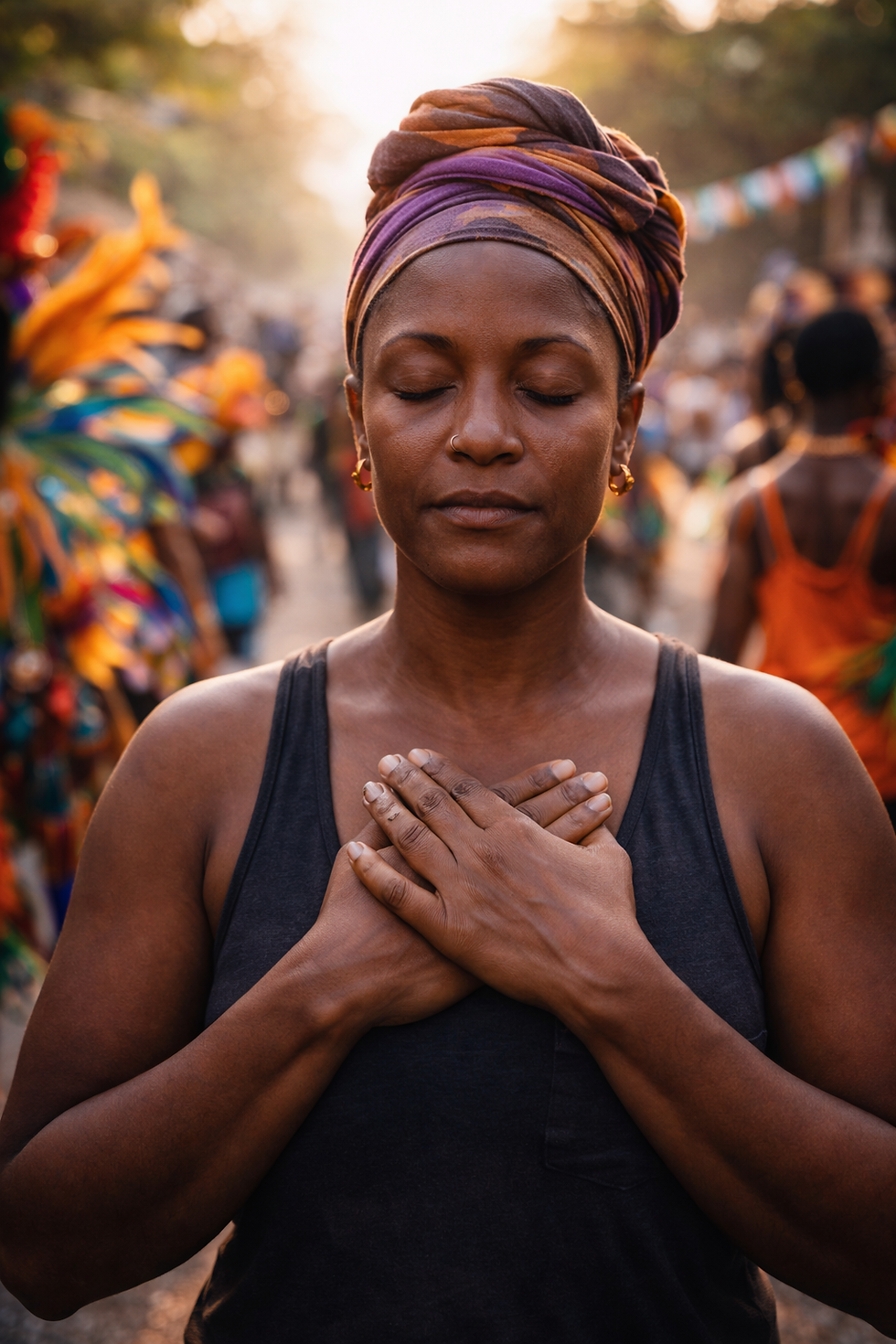
Yoga is often misunderstood as flexibility, calmness or escape.
At its core, it is none of those things.
Yoga is a practice of relationship:
To the body.
To sensation.
To limits.
To impact.
And during Carnival, a season defined by proximity, stimulation, movement and heightened emotion, that relationship matters more than ever.
Carnival expands expression.
Yoga teaches containment.
These are not opposites. They are partners.
Non-Harm Is the First Discipline
One of the foundational principles of yoga is ahimsa, non-harm.
This is often reduced to “being nice” or avoiding violence. But ahimsa is far more precise than that. It asks a harder question: How do my actions affect the nervous system — mine and yours?
Harm is not only physical.
It is energetic.
It is emotional.
It is psychological.
It is relational.
During Carnival, harm often occurs not because people intend violence, but because boundaries collapse under stimulation.
Ahimsa is the practice of not crossing that line.
Boundaries Are Not Restrictions. They Are Intelligence
In yoga, boundaries are learned through sensation.
You notice where stretch becomes strain. Where effort becomes aggression.Where movement stops being responsive and starts being forceful. That awareness trains discernment. Carnival requires the same skill.
Boundaries are not about stopping movement or joy. They are about knowing when to move closer and when to pull back and respecting that choice in yourself and others.
A body that knows its limits is less likely to violate someone else’s.
The Body Always Knows First
Yoga teaches people to listen before reacting.
To feel impulse without immediately acting on it.
To notice heat, desire, excitement, irritation and pause.
Carnival environments are designed to stimulate:
Music is loud.
Bodies are close.
Alcohol lowers inhibition.
Energy feeds on itself.
Without awareness, impulse becomes action before thought arrives.
Yoga does not remove impulse. It introduces space. And that space is where choice lives.
Non-Harm During Carnival Is Not Abstinence
Practising non-harm does not mean avoiding Carnival.
It does not mean staying still.
It does not mean policing joy.
It does not mean moral superiority.
It means moving with awareness of consequence. It means understanding that:
Expression does not equal access
Desire does not override consent
Proximity does not erase choice
Yoga trains the ability to hold sensation without entitlement. That skill matters on the road.
Containment Is Not Suppression
A common misconception is that restraint kills freedom.
Yoga teaches the opposite.
Containment allows energy to move without destruction. It keeps intensity from turning into harm and preserves joy instead of burning it out.
Carnival without boundaries becomes dangerous, because boundaries without joy become sterile. The wisdom is in holding both.
Regulation Is a Cultural Skill
Long before modern trauma language, Caribbean culture already understood regulation.
Through rhythm.
Through call-and-response.
Through collective timing.
Through knowing when to advance and when to retreat.
Yoga names what the culture has always practised:
Stay present.
Stay responsive.
Stay aware of impact.
Non-harm is not passive. It is active attentiveness.
Respect Is Embodied, Not Declared
You cannot talk your way into non-harm. You have to practise it.
Yoga reminds us that respect lives in the body:
In how you approach.
In how you read cues.
In how you stop.
In how you respond to “no” without argument, pressure or punishment.
During Carnival, the most ethical person is not the quietest one. It is the most aware one.
Freedom Needs Skill
Carnival is freedom. Yoga is skill.
Without skill, freedom becomes reckless. Without freedom, skill becomes rigid. Non-harm is what allows freedom to last.
It is what makes Carnival sustainable, not just exciting.
This Is Not About Control. It Is About Care
Yoga does not ask people to behave. It asks them to notice.
Notice your breath.
Notice tension.
Notice your impulses.
Notice when excitement turns into disregard.
That noticing is care.
Care for self.
Care for others.
Care for the culture itself.
Carnival does not need to be tamed. It needs to be held.
When Awareness Leads, Joy Survives
Yoga, at its root, is not about poses. It is about relationship. And during Carnival, that relationship is tested.
Non-harm is not the absence of movement. It is movement guided by awareness.
Boundaries are not barriers to joy. They are what keep joy from becoming harm.
Whisper from the Heart
Non-harm is not silence.
It is awareness in motion.
It is knowing when to move closer and when to step back.
Freedom lasts when it is carried with care.
— Nadia Renata | Audacious Evolution
Affirmation
I move with awareness and respect for boundaries - my own and others’.
I honour joy without entitlement and freedom without harm.
I listen to my body before impulse becomes action.
Care is how I participate fully.
Join My Classes in Trinidad and Tobago
In all of my classes — from beginner to advanced — we honour the reality that every body shows up differently from day to day. Props are used to support smarter, safer movement and rest is treated as part of the practice, not a failure of it.
Whether your energy feels light or heavy, you’ll find a space where listening is encouraged, options are always offered and practice is shaped by what your body can genuinely sustain.
We build strength, flexibility and self-awareness without ego, pressure or pain.
WhatsApp: 1-868-717-2602
This article is part of the Audacious Evolution Community series, which explores Caribbean culture, social norms and the unseen forces that shape behaviour and relationships. The goal is understanding, not blame and creating space for more informed, compassionate conversations.
Enjoyed reading this and want more from Audacious Evolution?
Discover reflections, insights and inspiration across Body, Mind, Spirit and Community.
Follow Audacious Evolution on your favourite social media platform -


Comments