
Dear Diaspora: Your Children Don't Know Us Anymore
Article 7 of the Dear Diaspora Series
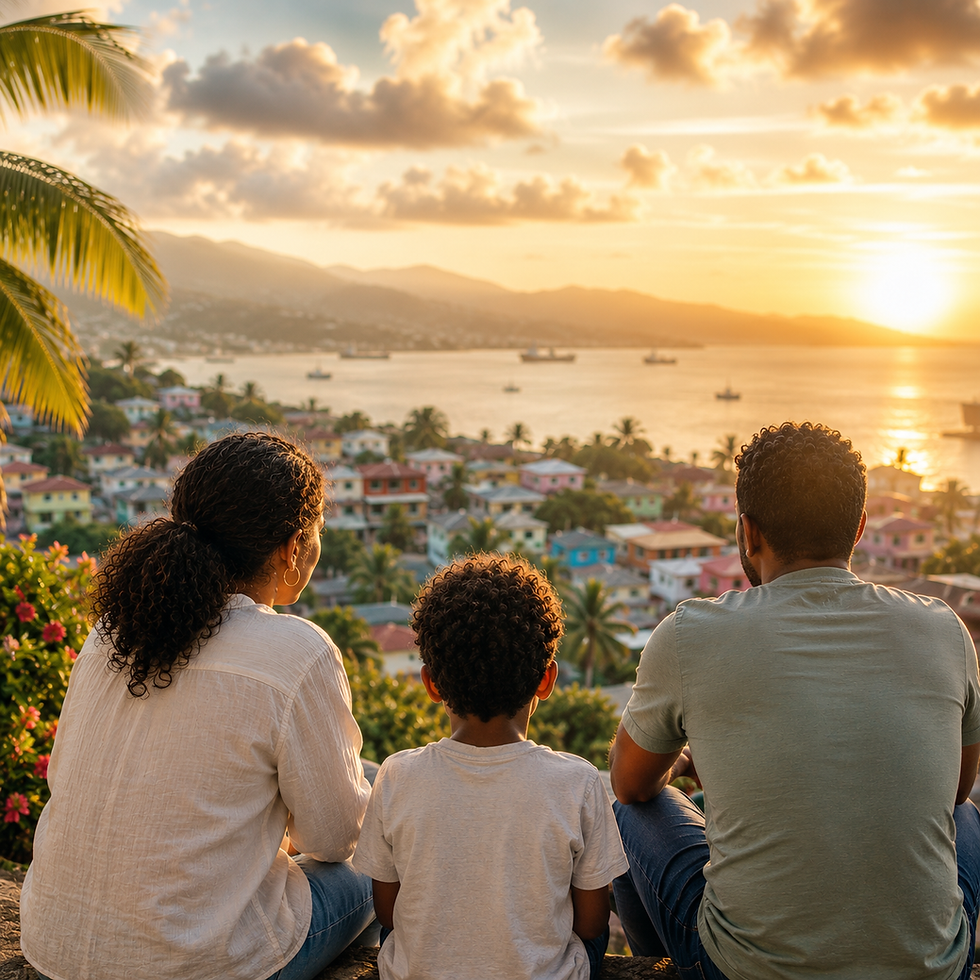
There is a moment many members of the diaspora eventually experience. It often arrives quietly. Perhaps it happens during a visit home, or during a conversation about politics, culture or history. It can also happen when a child looks around a place their parents still call "home" and realises they are experiencing it very differently.
The moment is simple: Your children don't know us anymore. Not really.
They know the food. They know the music. They know the stories. They may know the flag, the family names and the annual traditions carefully preserved by parents and grandparents living abroad. But the people, the place, the humour, the struggles, the contradictions, the everyday realities and the constantly evolving culture that make up life in the Caribbean often feel more distant.
Not because they do not care and not because they have rejected their heritage. But because inheritance and experience are not the same thing.
A Different Kind Of Childhood
Many members of the diaspora grew up here. They walked these streets. Attended these schools. Understood the unwritten rules. Knew which neighbour would watch them if they got into trouble and which shopkeeper would ask about their parents. The Caribbean was not something they learned about. It was simply life.
Their children often grow up differently — different schools, different communities, different friendships, different reference points. The countries they call home are not the countries their parents left behind. It is one of the more difficult truths for some members of the diaspora to accept; that their children are not simply Caribbean children living somewhere else. They are also products of the countries in which they were raised.
A child growing up in Toronto experiences the world differently from a child growing up in Trinidad. A child growing up in London experiences the world differently from a child growing up in Jamaica. A child growing up in Amsterdam experiences the world differently from a child growing up in Guyana. Their values, assumptions and expectations are shaped by the societies around them, with Caribbean heritage existing alongside, not instead of, those other influences. They may carry Caribbean heritage, but they are also Canadian, British, Dutch, American or whatever country they have spent their lives calling home.
This is different from the costume we talked about last time. A child who genuinely grew up in Toronto, carrying Caribbean heritage as one real part of a real life lived elsewhere, is not the same as someone who treats home as an aesthetic to put on twice a year. One is an honest, structural reality of migration. The other is a choice. This article is about the first.
That distinction matters, because it does not make these children less authentic. It makes them different. They often experience the Caribbean through a different lens; things that feel normal to their parents may feel unfamiliar to them, things their parents accept without question may surprise them, things their parents celebrate may confuse them. And sometimes they notice things that those of us who grew up here no longer see, simply because we stopped seeing them a long time ago.
Their perspective is not wrong. It is shaped by a different lived experience. That is all.
When Home Becomes A Story
For many second and third generation children, the Caribbean exists primarily through stories. Stories told by parents and grandparents. Stories shared during holidays, family gatherings and cultural celebrations. Stories about how things used to be.
The problem is not the stories themselves. Stories are how culture survives.
The challenge is that stories often simplify. They preserve memories. They preserve pride. But they do not always capture complexity or the changes that have happened over the course of time they have not been here. Stories based on memories preserved in time. Home then becomes less of a living place and more of an idea. A place remembered rather than experienced. A place inherited rather than known. And when that happens, the relationship begins to change.
The Visit That Doesn't Feel Like Home
Many diaspora parents dream of bringing their children "home." They want them to see where they came from. Meet relatives. Experience the culture. Understand their roots. But what feels like a return home for the parent feels like just a visit for the child.
The parent remembers. The child observes. The parent feels familiarity. The child experiences novelty. The parent sees home. The child sees somewhere they are visiting. Neither perspective is wrong. But they are not the same. And recognising that difference matters.
Culture Is More Than Celebration
One of the easiest ways for culture to survive across generations is through its most visible expression: Food. Music. Festivals. Family traditions.
These things matter and they are often the first bridge between generations. But culture is also the things that are harder to package and preserve. The humour. The values. The way communities function. The social realities. The historical context. The ways people respond to hardship, joy, conflict and change.
These are not always passed down as easily as recipes or songs. And yet they are often what shape a culture most deeply.
The People They Never Really Knew
Perhaps the greatest loss is not cultural. It is relational.
The child who grows up abroad may know the names of relatives back home without truly knowing the people themselves. They may recognise faces in photographs. They may exchange greetings during holidays. They may visit occasionally. But they may never develop the kind of everyday relationships that naturally grow when people live near one another.
They may never know which aunt tells the best stories, which cousin always makes everyone laugh, which neighbour unofficially adopted half the street, or which elder quietly became the keeper of family history.
The relationships exist. But they often exist at a distance. And distance changes things.
The Fear Beneath The Conversation
For many parents and grandparents, there is an unspoken fear beneath all of this. Not simply that their children will forget where they came from. But that one day the connection will become so distant that the people who stayed and the people who left will no longer recognise each other.
That the stories will remain, but the relationship will fade. That home will become a symbol rather than a living connection. It is a difficult fear to acknowledge, but it exists and it is part of the emotional reality of migration.
There is a grief in that which is rarely discussed.
Not the grief of death, but the grief of distance. The grief of realising that the cousins who once played together now feel like strangers. The grief of grandparents watching grandchildren grow up through photographs and video calls. The grief of family branches slowly drifting apart, not because of conflict, but because life carried them in different directions.
Migration creates opportunities. It can create safety, stability and possibilities that might not otherwise exist. But every gain comes with a cost. Sometimes that cost is measured in miles and sometimes it is measured in relationships.
Connection Is Still Possible
The good news is that connection does not disappear simply because it changes.
Children do not need to grow up in the Caribbean to appreciate their heritage but meaningful connection requires more than occasional visits and nostalgic stories. It requires honesty. Curiosity. Relationships.
It requires introducing children not only to the beautiful parts of Caribbean life but also to its realities. It requires helping them understand that the Caribbean is not a museum of preserved traditions. It is a living, evolving place filled with real people living real lives.
That is not always easy. Many parents want to pass on pride. They want their children to love where they came from but love built only on idealised stories can be fragile. Real connection requires something deeper. It requires sharing not only the beauty of the Caribbean, but also its complexities, challenges and contradictions. A place cannot truly be known if it is only ever presented as a postcard.
Perhaps the goal is not to make our children become who we were but to help them understand where they came from while allowing them to become who they are.
More Than An Inheritance
Heritage is not simply something we pass down. It is something each generation must choose how to engage with.
The children of the diaspora may never experience the Caribbean in exactly the same way their parents did. And perhaps they shouldn't.
Their journey is different. Their perspective is different. Their story is different.
Yet identity is not a fixed destination. Many second and third generation Caribbean people spend years rediscovering parts of themselves. Some learn family history as adults. Some begin visiting more often. Some become curious about the places their parents left behind. Others do not. Heritage can be inherited, but connection often becomes a choice.
But if we are intentional, they can still inherit something deeper than nostalgia. They can inherit understanding. And that may be one of the greatest gifts we can leave them.
Perhaps the truth is not that your children don't know us anymore. Perhaps it is that they don't know us the way you did. And perhaps that is the inevitable reality of migration.
The challenge is not preserving the exact relationship that existed before.
The challenge is creating a new one.
Whisper to Your Heart
"Connection is not measured by how often we visit home, but by how deeply we remain in relationship with the people, stories and communities that shaped us."
– Nadia Renata | Audacious Evolution
Affirmation
"I honour my roots by sharing more than traditions. I share understanding, compassion and a genuine connection to the people and places that helped shape me."
– Nadia Renata | Audacious Evolution
Continue the Conversation
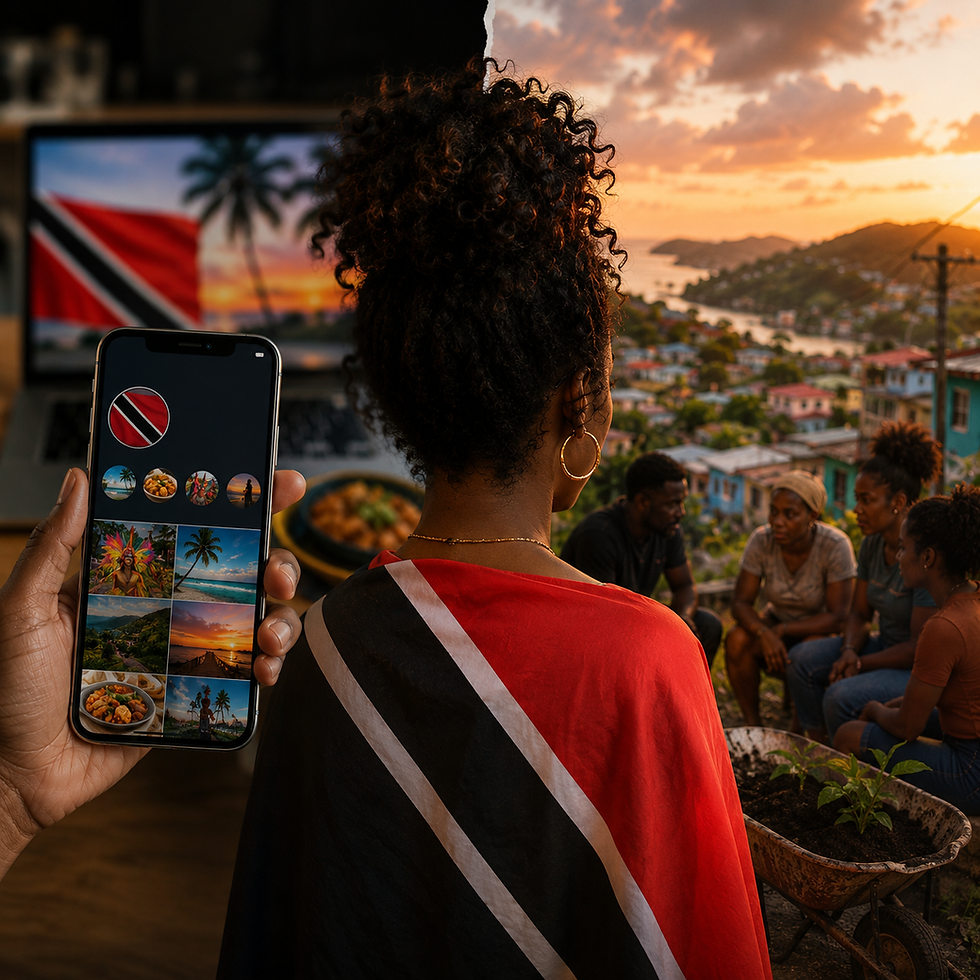
Previous in the Series: Dear Diaspora: The Flag In Your Bio — exploring what it means to claim a Caribbean identity from afar, how culture becomes performance, and why connection to home requires more than nostalgia and national symbols.
Next in the Series: Dear Diaspora: Come Home Differently — bringing the Dear Diaspora series to a close with a reflection on healing the relationship between those who stayed and those who left, embracing curiosity over certainty, and discovering what it means to reconnect with home in a way that honours how we have all changed.
This article is part of the Audacious Evolution Community series, which explores Caribbean culture, social norms and the unseen forces that shape behaviour and relationships. The goal is understanding, not blame, and creating space for more informed, compassionate conversations.
If this conversation resonated with you, you can explore more articles and reflections from Audacious Evolution across Body, Mind, Spirit and Community.
You can also connect with Audacious Evolution on Facebook, Instagram, TikTok, YouTube, BlueSky and X where these conversations continue beyond the website.


Comments